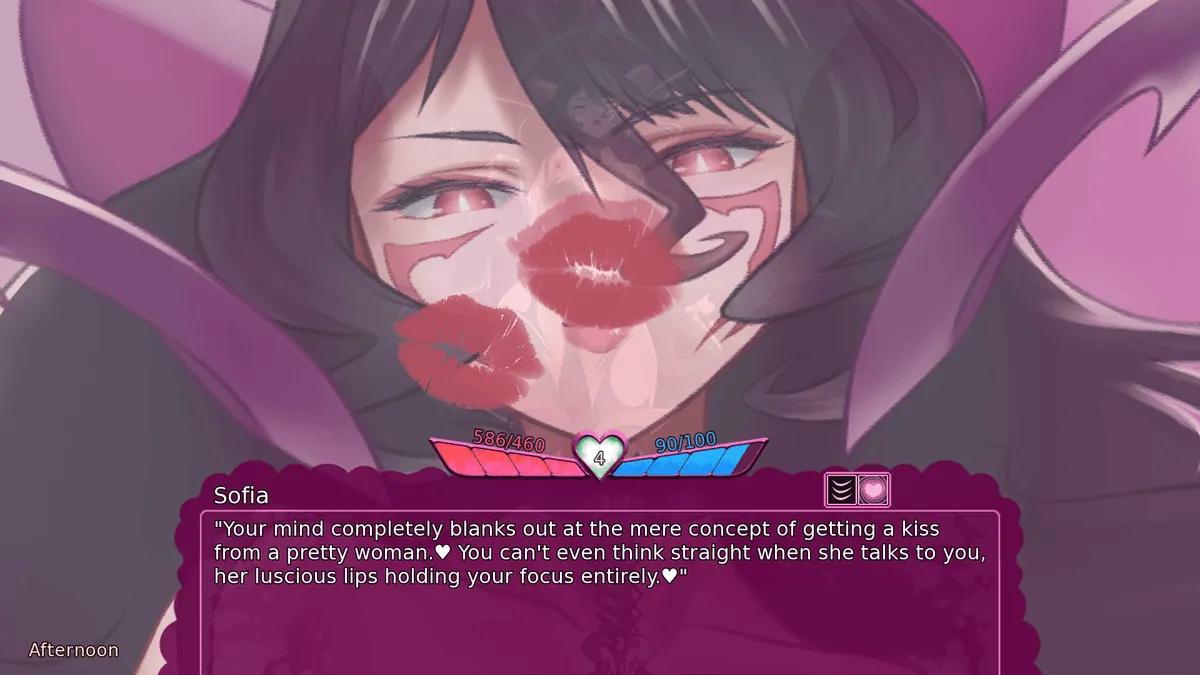
Corruption
Play Corruption
Corruption Screenshots









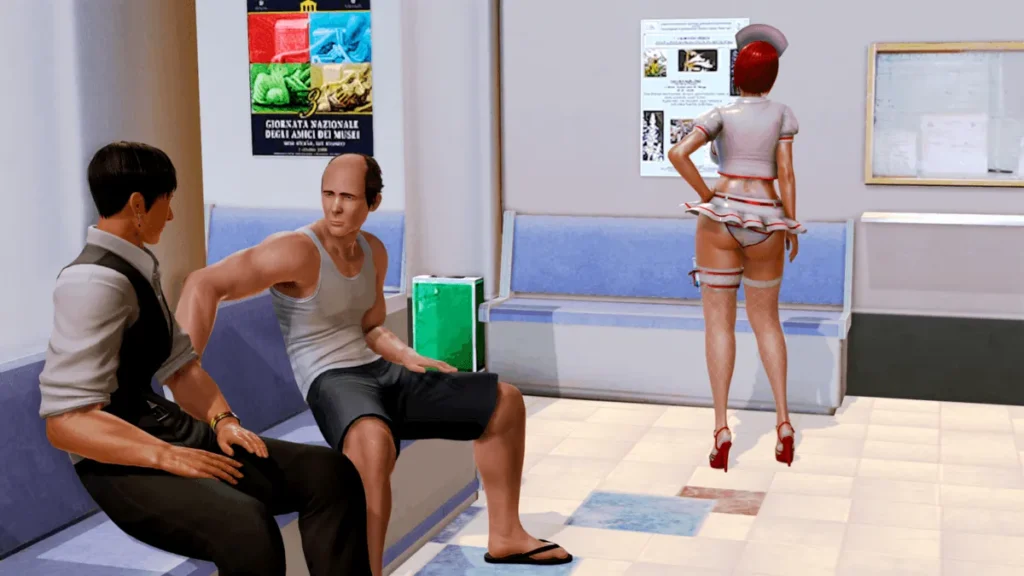



Corruption review
A deep dive into how player choices shape character development and story outcomes
Adult narrative games have evolved significantly in their approach to player agency and character development. One of the most compelling mechanics in modern adult gaming is the corruption system—a dynamic framework that tracks character progression through moral and behavioral choices. This system fundamentally shapes how characters respond to player actions, determining which story paths become available and how relationships develop throughout the game. Understanding how corruption mechanics function provides insight into the intricate balance between player freedom and narrative consequence, creating meaningful gameplay experiences where every decision carries weight.
How the Corruption System Works in Adult Narrative Games
Ever found yourself replaying a scene in a narrative-driven game, desperately clicking every dialogue option, only to hit that frustrating wall? You know the one—where the character you’re trying to connect with shuts down your advance with a polite, but firm, “I’m not ready for that.” 😤 I’ve been there more times than I can count. It feels like the story is locked away, and you’re just an observer rather than the architect of your own experience.
That was me, until I truly grasped the core engine powering these stories: the corruption system. It’s not just a naughty meter or a simple “good vs. evil” slider. Think of it as the game’s way of tracking your character’s—or your relationship’s—psychological and moral journey. It’s a sophisticated character development corruption tracker that measures willingness, curiosity, and the gradual erosion of personal boundaries. Getting a handle on this corruption system mechanics is the master key that transforms you from a passive player into an active storyteller. Let’s dive in.
What is Corruption and How Does It Track Character Development?
At its heart, corruption is a narrative quantification of change. It’s a numeric representation of a character’s progression from point A (perhaps reserved, innocent, or professional) to point B (more adventurous, submissive, dominant, or explicit). It’s the game’s internal logic asking, “Based on everything that has happened, what is this character now comfortable with?”
This isn’t about forcing anyone into anything. Instead, it’s about character corruption points acting as a permission slip. Every choice you make that pushes a boundary—a risqué compliment, a physical touch that lingers a moment too long, agreeing to a clandestine meeting—earns you these points. They are the currency of narrative evolution.
For example, early on, a character might blush and change the subject if you comment on their appearance. But after you’ve consistently chosen flirtatious dialogue, shared a vulnerable moment, and earned a few character corruption points, that same comment might now elicit a shy smile and a returned compliment. The character hasn’t been “broken”; they’ve been developed. Their identity has shifted, and the game recognizes this through the corruption system mechanics, unlocking new layers of their personality.
My Insight: I used to think corruption was just about “unlocking scenes.” I was wrong. It’s about unlocking character. The scenes are just the payoff for a journey you’ve co-authored.
To see this in action, let’s look at how different levels of investment (corruption thresholds gameplay) open up entirely different story branches for two common character archetypes.
| Character Archetype | Corruption Threshold | Unlocked Dialogue & Content |
|---|---|---|
| The Reserved Companion | Low (5-15 points) | Accepts casual physical contact (hand on shoulder). Opens up about minor personal fears. Dialogue options shift from formal to friendly. |
| The Reserved Companion | Medium (16-30 points) | Initiates light flirtation. Consents to private, intimate meetings. Unlocks options for sensual but non-explicit scenes (e.g., a slow dance, a heartfelt confession). |
| The Reserved Companion | High (31-50 points) | Explicitly expresses desire. Unlocks full romantic and intimate sequences. Story decisions may involve them prioritizing your relationship above all else. |
| The Professional Authority Figure | Low (10-20 points) | Begins to blur professional lines, sharing personal anecdotes during work. Allows use of first names. Dialogue gains a subtle double meaning. |
| The Professional Authority Figure | Medium (21-40 points) | Engages in clandestine, secretive encounters. Unlocks “riskier” scenarios where discovery is a narrative tension. Power dynamics in dialogue become a playful negotiation. |
| The Professional Authority Figure | High (41-60 points) | Fully abandons professional pretext in private. Unlocks scenes emphasizing the taboo nature of the relationship. May influence major plot points in your favor, risking their status. |
This table shows that corruption unlocks content in tiers, like opening successive doors in a hallway. You can’t jump to the end without walking the path. Each character’s “curve”—their starting threshold and point requirements—is unique, making every relationship feel distinct and earned. 🗝️
The Relationship Between Corruption and Trust Mechanics
Now, here’s where the genius of the corruption system mechanics really shines: it’s almost always in a delicate dance with another core stat—Trust. This creates the central strategic puzzle of these games. You can’t just bulldoze your way to high corruption; you have to manage the corruption and trust balance.
Think of it this way:
* Trust is the foundation of the relationship. It’s built on kindness, reliability, keeping promises, and emotional support. It asks, “Do I feel safe with you?”
* Corruption is the direction of the relationship. It’s built on flirtation, risk, pushing boundaries, and physical escalation. It asks, “Do I want you?”
The critical twist is that actions which grant character corruption points often cost Trust points, and vice-versa. Helping a character with their problems (gaining Trust) might be a “pure” choice that doesn’t advance physical intimacy. Conversely, making a bold, lustful advance (gaining Corruption) might shock them and cause a temporary loss of Trust.
Why does this balance matter? Because if your Trust is too low, even with high Corruption, the character may refuse your advances—they might want to, but they don’t trust you enough to be vulnerable. Conversely, high Trust with low Corruption leads to a deep, heartfelt, but likely platonic friendship. The “golden path” for most story outcomes requires you to carefully build both stats, often in a two-steps-forward, one-step-back rhythm.
Let me give you a personal case study. In one playthrough, I focused solely on how to increase corruption with a particular character. I took every flirt option, every opportunity for physical contact. I maxed out my corruption quickly! 🎯 But then, when a story crisis hit, I needed her to trust me with a crucial secret. The game checked our Trust stat, which was in the gutter because I’d never taken the time to just talk to her. She refused, and I was locked out of an entire story branch. I had won the battle (corruption) but lost the war (the story I wanted). That failure taught me more about corruption and trust balance than any guide ever could.
The gameplay becomes a strategic resource management. Do you use this intimate moment to gain a chunk of Corruption, knowing it might worry them? Or do you use it to solidify Trust, ensuring they’ll be there for you later? This corruption thresholds gameplay isn’t just about reaching a number; it’s about when and how you choose to reach it.
How Corruption Unlocks New Story Paths and Content
This is the payoff. All that strategy, all that careful balancing, culminates in the moment the game opens up and says, “You’ve earned this.” Corruption unlocks content in ways that fundamentally reshape the narrative, not just add a scene. It changes who your character is in the story’s eyes.
Let’s walk through a concrete example, the infamous “shower scene” scenario found in many games. This is a perfect showcase of corruption thresholds gameplay.
- Situation: Your love interest is headed to the shower. You have the option to “Talk,” “Make an excuse to follow,” or “Let them go.”
- At LOW Corruption (0-10 points):
- If you choose “Make an excuse to follow,” you’re shut down immediately. They laugh it off as a weird joke or give you a suspicious look. The “Talk” option leads to bland, friendly chatter. The story remains strictly platonic here.
- At MEDIUM Corruption (11-25 points):
- Now, “Make an excuse to follow” unlocks a new layer. You might say you need to grab something from the bathroom. The scene plays out with tension—maybe you talk through the door, the dialogue is heavy with implication, but it cuts away before anything explicit. You’ve earned a charged, intimate moment that deepens the connection, all because your character corruption points met the threshold.
- At HIGH Corruption (26+ points):
- This is where the path fully branches. Meeting the high threshold might unlock a new choice entirely: a confident, direct “Join you?” This bold option, unavailable before, can lead to a full, explicit scene. But even here, your prior corruption and trust balance matters. High corruption with medium trust might lead to a playful but brief encounter. High corruption with high trust might unlock a longer, more emotionally vulnerable version of the same scene.
See how it works? The corruption system mechanics don’t just gate the scene; they gate the very choices that lead to the scene. Your character’s development, tracked by those points, determines the options on your screen. You’re not just watching a story; you’re living one that has been personally tailored by your prior decisions.
This extends to the grand finale. The long-term consequences are immense. A playthrough with maxed corruption might unlock a “passionate but chaotic” ending where personal desire trumps all. A balanced playthrough with high trust and medium corruption could yield a “deep, committed partnership” ending. A low-corruption, high-trust route might end with a powerful, lifelong friendship instead of a romance. The character development corruption has, literally, developed a different character arc.
So, how to increase corruption strategically? It’s not about mindless clicking. It’s about:
1. Reading the room: Is the character in a playful or serious mood? A serious moment is better for building Trust.
2. Pacing your pushes: Don’t spam every flirt option in one conversation. Space them out, and follow a bold move with a trusting one to recover balance.
3. Understanding character-specific triggers: One character might gain corruption from receiving gifts, another from taking charge in a dangerous situation.
Mastering this system is what turns a good game into an unforgettable one. It transforms gameplay from a series of choices into a true narrative symphony, where every stat point is a note and every threshold is a crescendo. You stop playing the game and start conducting it. Your understanding of corruption unlocks content, guides character arcs, and ultimately writes the final chapter yourself. Now go back to that save file—that story isn’t locked anymore. You have the key. 🔑
The corruption system represents a sophisticated approach to player agency in narrative-driven games, creating meaningful consequences for every choice made. By understanding how corruption points accumulate, interact with trust mechanics, and unlock new content, players can craft personalized gaming experiences that align with their preferred story outcomes. The strategic depth of managing corruption across multiple characters adds layers of replayability, encouraging players to explore different paths and discover alternative scenarios. Whether pursuing a hardcore or soft approach, the corruption mechanic demonstrates how modern adult games have evolved beyond simple branching narratives into complex systems where player decisions genuinely shape character development and story progression. Mastering these mechanics transforms gameplay from passive consumption into active storytelling.