
Demon Boy
Play Demon Boy
Demon Boy Screenshots











Demon Boy review
Master Choices, Relationships, and Secrets in This Addictive Adventure
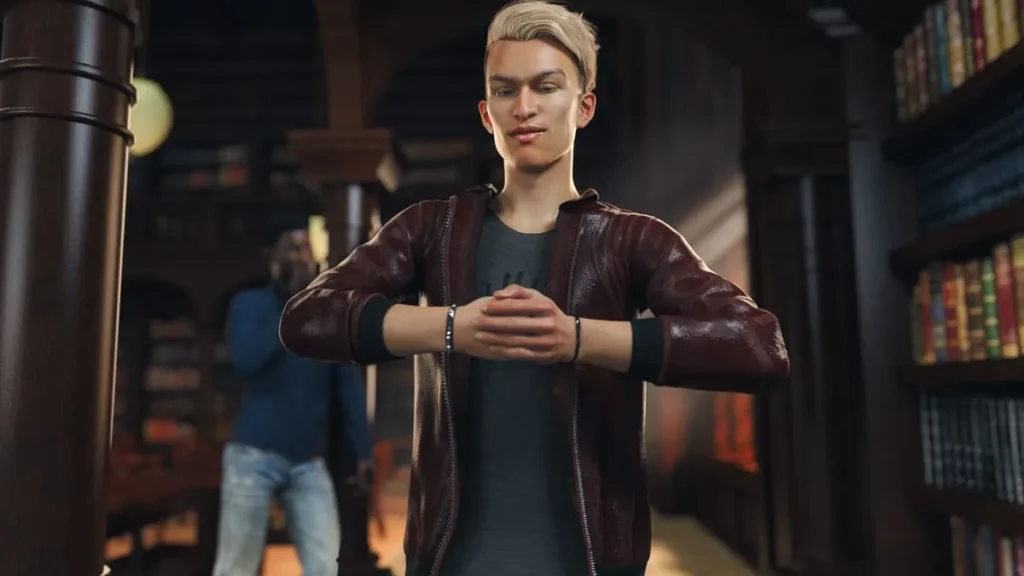
Ever stumbled upon a game that flips your world upside down, blending raw power fantasies with tough choices? That’s Demon Boy for you—a gripping visual novel where you’re a young guy in a cramped apartment, bullied and overlooked, until a mysterious book unleashes your inner demon. Suddenly, you’re navigating a web of seduction, corruption, and supernatural twists. I’ve sunk hours into Demon Boy, and let me tell you, its branching paths and relationship mechanics hooked me like nothing else. Whether you’re chasing steamy encounters or multiple endings, this guide unpacks everything to supercharge your playthrough. Dive in and claim your demonic destiny!
What Makes Demon Boy Gameplay So Addictive?
I still remember the moment I stumbled upon that strange, leather-bound book in the attic during my first playthrough. My character, the ultimate high school nobody, was just killing time before another miserable day. But clicking on that glowing rune? It changed everything. One minute I was a social ghost, the next I was weaving subtle suggestions into conversations, my words carrying a supernatural weight. This is the heart of Demon Boy gameplay: the thrilling power fantasy of trading perceived weakness for hidden, world-altering strength. It’s not about raw power; it’s about the exquisite control of influencing every person and event around you, and that discovery is what makes this adventure so deeply engaging.
The magic isn’t in a single spell or fight—it’s in the cascading consequences of every decision you make. This is a world that remembers, and your journey is uniquely yours.
How Branching Narratives Shape Your Demon Boy Journey
Forget the idea of a single, straight path. The branching narratives in Demon Boy are like a supernatural spider web, where every thread you touch vibrates through the entire story. Your dialogue choices aren’t just for flavor; they are literal forks in the road that lock and unlock entire chapters of the game.
Let me give you a real example from one of my runs. I was trying to deal with the school’s notorious bully, Brad. In one playthrough, I used the book’s influence to publicly humiliate him with a whispered secret, making him a laughingstock. This path led to a direct, explosive boss-style confrontation later where he confronted me, fueled by rage and desperation. 🥊
In another run, I took a more cunning approach. I used my growing influence to isolate him from his friends, planting seeds of doubt and paranoia. This branching narrative steered me into a stealth mission, where I had to retrieve incriminating evidence from his locker without getting caught, completely avoiding a physical fight but diving deep into the school’s shadowy underworld. Two completely different stories, gameplay styles, and outcomes, all born from a single choice earlier in the game.
This is the genius of player choices in Demon Boy. You’re not just picking a pre-written personality; you are architecting the plot’s very structure. Will you be a benevolent guide, a manipulative puppeteer, or a feared enigma? The game’s narrative branches will grow to support your version of the tale, making each save file a distinct story.
Mastering Key Demon Boy Mechanics for Epic Wins
Understanding the Demon Boy mechanics is the difference between flailing with your new power and mastering it with precision. The game gives you incredible tools, but you need to learn how they interact. Think of these systems as the supernatural rules you must learn to bend.
Your primary resource is Soul Sparks. These glowing fragments are earned by completing quests, influencing major events, and reaching pivotal story moments. They’re your currency for everything: deepening a relationship with a love interest to unlock their personal quest, purchasing powerful entries in the demonic book to enhance your abilities, or even bribing certain spirits for information. Do you spend them on power, or on people? The choice defines your run.
Then there’s the Corruption Meter. This is the moral compass of your soul, but it’s not just about “good vs. evil.” Using the book’s power for selfish, cruel, or outright malicious acts fills this meter. A high Corruption unlocks intimidating dialogue options, fearsome abilities, and endings where you command through terror. A low Corruption fosters genuine trust, opens paths of diplomacy, and leads to endings built on alliances. Certain characters will leave you if you become too corrupt, while others will only pledge loyalty if you do. ⚖️
Closely tied to this is the Influence Meter, but it’s more than one stat. It secretly tracks three dimensions: Trust, Fear, and Desire. Your actions and choices shift the balance with every character. Helping the shy artist will build Trust. Blackmailing the student council president will instill Fear. Sharing a mysterious, captivating secret might spark Desire. Different story paths and character resolutions require different balances of these hidden stats.
Finally, never underestimate the time cycle. The world operates on a day/night schedule. Some characters are only available after dark. Certain mystical events only trigger under the full moon. A pro tip? Always exploit the day/night cycle for vulnerabilities. That teacher who seems unshakeable during the day might be found haunting a lonely bar at night, where his defenses are down and a conversation can change everything.
To show you how these Demon Boy features set it apart, let’s stack it up against a more traditional story game:
| Feature | Demon Boy | Typical Visual Novels |
|---|---|---|
| Branching Paths | Dialogue choices alter plot structure, leading to entirely different mission types (stealth, social, confrontation). | Choices typically lead to a handful of predetermined endings, often with minor plot deviations. |
| Character Development | Dynamic loyalty systems (Trust/Fear/Desire & Corruption) mean character allegiances can shift or break based on your actions. | Character routes are usually linear; once on a path, relationships follow a fixed progression. |
| Player Agency | Integrated mechanics (Soul Sparks, Time Cycle) allow strategic resource management that directly shapes narrative possibilities. | Agency is often limited to narrative choices without supporting resource or time-based strategy. |
I learned the importance of balancing these systems the hard way. I was desperate to unlock a key scene with the reclusive occult shop owner, Elara. It required a high level of Trust, but I’d been spreading my Soul Sparks too thin and my Influence was too low. I had to dedicate two full in-game days—using day cycles to run errands for her and night cycles to discuss forbidden lore—while carefully spending Sparks only on abilities that boosted my social persuasion. When the scene finally unlocked, revealing a heartbreaking secret about her past, the victory wasn’t just in seeing the story; it was in the strategic mastery of the Demon Boy mechanics that got me there. 🏆
Why Player Choices in Demon Boy Lead to Replay Gold
This brings us to the crown jewel of the experience: the insane replay value. Most games tempt you with a “what if?” scenario. Demon Boy is built upon it. Those player choices in Demon Boy aren’t just about seeing a different ending screen; they’re about living a different life in that world.
Because the branching narratives in Demon Boy are so extensive, your second playthrough can feel like a completely new game. That quiet library assistant you ignored the first time? On run two, she might become your primary informant on the spectral haunting in the east wing, opening a whole mystery you never knew existed. The Corruption Meter means that playing as a benevolent guide versus a ruthless manipulator doesn’t just change dialogue; it changes which characters will even speak to you, which quests are available, and how you solve every problem.
My biggest piece of advice for how to play Demon Boy for maximum enjoyment? On your first run, turn off the guide. Silence that inner min-maxer. Follow your instincts. Choose the dialogue options that feel right for the character you’re imagining in the moment. The most authentic, surprising, and often most rewarding story beats come from organic play. The game is designed to reward your genuine curiosity and role-playing, not just a checklist of optimal stats. You’ll build a unique, personal story that will make your subsequent, more strategic playthroughs all the more meaningful by comparison.
So, what makes the Demon Boy gameplay so deeply engaging? It’s the perfect fusion of narrative weight and mechanical depth. You are not a passenger in this story. You are the author, the strategist, and the protagonist all at once. The Demon Boy features—from the strategic time management to the delicate balance of your soul’s corruption—provide a rich, interactive framework for the branching narratives to unfold upon. Every choice carries tangible weight, every resource matters, and every relationship is a puzzle to be solved. This is how to play Demon Boy: embrace the chaos, own your choices, and dive back in to see how the other half—or third, or fourth—lives. Your next journey through its halls is already waiting to be written, and it will be nothing like the last.
Pro Tips for Your First Playthrough:
* Trust Your Gut: Go in blind and make choices based on what feels interesting, not what you think is “correct.”
* Balance is Key: Don’t ignore the Corruption Meter. Experiment with both light and dark choices to see how the world reacts.
* Talk to Everyone, Twice: Characters have new things to say after major events and at different times of day.
* Exploit the Clock: Use the day/night cycle strategically. Need leverage? Find people when they’re vulnerable after dark.
* Specialize Your Sparks: Consider focusing your early Soul Sparks on either relationship boosts or power upgrades to strongly define your first path.
Demon Boy isn’t just a game—it’s a personal odyssey of power, temptation, and self-discovery that keeps pulling you back for more. From those heart-pounding choices that reshape relationships to the thrill of unlocking hidden scenes, every moment feels earned and electric. My own runs taught me that embracing the chaos leads to the richest stories. Ready to step into the demon’s shoes? Fire it up, experiment with paths, and share your wildest endings in the comments. Your adventure awaits—what side will you unleash?