Lessons in Love
Play Lessons in Love
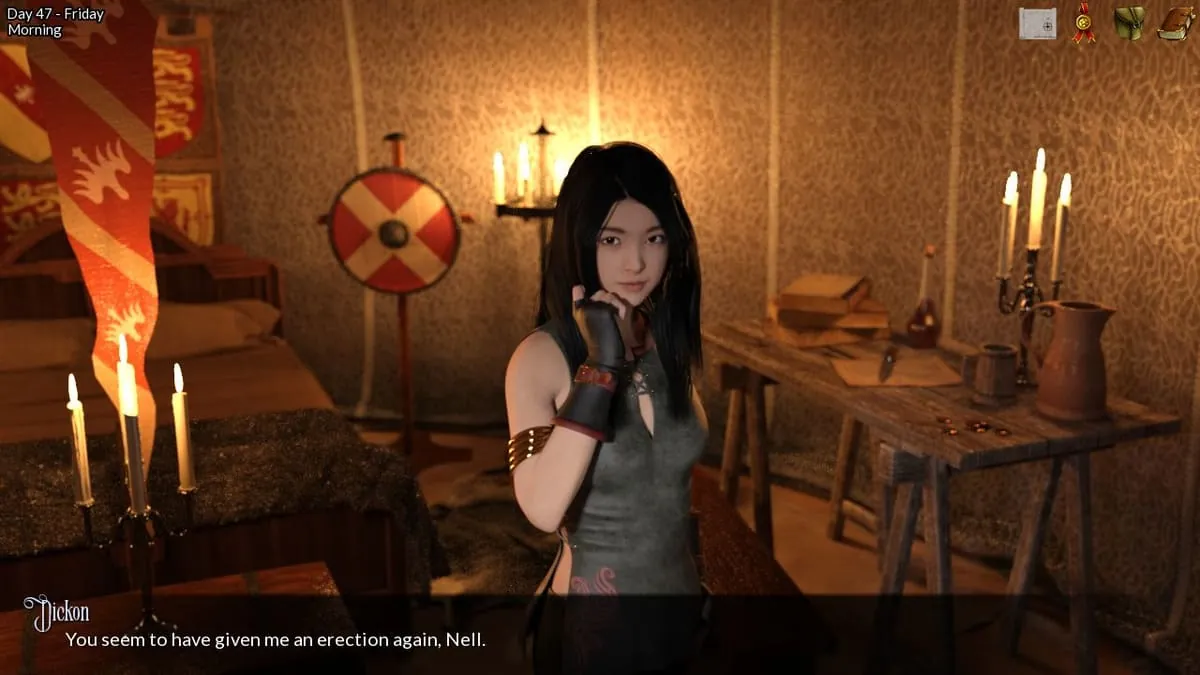
Lessons in Love Screenshots











Lessons in Love review
Master gameplay mechanics, character relationships, and story progression in this narrative-driven experience
Lessons in Love stands out as a complex visual novel that blends narrative depth with player choice mechanics. This game follows a mysterious protagonist who awakens as a teacher in Kumon-mi, navigating relationships with various characters while uncovering supernatural plot elements. The experience combines character-driven storytelling with branching narratives where your decisions significantly impact story outcomes and character development. Whether you’re new to visual novels or seeking to understand this title’s intricate systems, this guide covers everything from core mechanics to character dynamics and story progression.
Understanding Lessons in Love: Core Gameplay Mechanics and Story Framework
Ever feel like you’re just wandering through a digital school, clicking on places and hoping something interesting happens? 🙃 I sure did when I first booted up Lessons in Love. The sheer number of locations and characters felt overwhelming. But here’s the secret I learned the hard way: the core gameplay mechanics of Lessons in Love aren’t about random exploration. They’re a deliberate, daily dance between you, the clock, and the hearts of the characters. Your success hinges on understanding this loop. Forget typical game logic; this is a world where your attention is currency, and where you choose to spend it each day writes an entirely unique story.
This guide will break down that framework, so you can move from confused bystander to master storyteller. We’ll dive into the location-based system that structures your day, the deep visual novel affection system that unlocks everything, and the weight of your branching narrative choices. By the end, you’ll know exactly how to guide the story toward the moments and relationships you want to see.
How Location-Based Gameplay Shapes Your Experience
Think of each in-game day as a blank canvas with a limited number of brushstrokes. 🖼️ You wake up, and the entire school and town are theoretically open to you. The core loop is elegantly simple: choose a location, see who’s there, and initiate an interaction. But this is where the game’s brilliant design shines. Not every character is available every day, and their locations often change based on the story’s timeline, the day of the week, and even the weather.
This isn’t a sandbox; it’s a curated narrative space. Early on, you might bounce between the Classroom, Rooftop, and Library to check in on key characters. But as relationships deepen, new locations like specific clubs, town streets, or private homes unlock, tied directly to character relationship progression. The game masterfully uses this system to control pacing. You can’t rush intimacy; you have to be at the right place at the right time, often after reaching a specific affection threshold with a character.
My biggest “aha!” moment came when I realized events were chained. I spent a whole in-game week just talking to one character in the courtyard, boosting her affection, but nothing “big” seemed to happen. Then, on a rainy Thursday, I went to the Art Room instead—a location I rarely visited—and triggered a profound, multi-part story event that was directly caused by those earlier courtyard conversations. The game had been quietly tracking my interest all along. This is the essence of event triggers and requirements: showing up is just the first step. The real trigger is your prior investment.
Pro Tip: Don’t just visit locations randomly. If you’re aiming for a specific character’s story, pay attention to their daily routines mentioned in dialogue. They often hint at where they’ll be and when. Keeping a mental (or actual!) note of these patterns is the first step to mastering how to unlock story events.
The Affection System and Character Relationship Progression
If locations are the stage, then affection levels are the script. 🎭 The visual novel affection system in Lessons in Love is the absolute bedrock of progression. It’s a numerical representation of your relationship with each character, hidden from direct view but felt in every interaction. You raise it by:
* Choosing supportive or intimate dialogue options.
* Spending time with them at key locations.
* Successfully navigating sensitive conversations.
* Remembering small details about their lives in later talks.
This system gates all meaningful content. A character won’t confess a deep secret or invite you to a private event until they trust you enough, and the game measures that trust with a hard number. This creates a natural and rewarding character relationship progression from acquaintance, to friend, to confidant. The writing expertly reflects this; early dialogues are formal and guarded, while later conversations are layered with in-jokes, personal history, and emotional vulnerability.
Understanding the thresholds is crucial for planning your journey. Here’s a general guide to what levels of affection typically unlock:
| Affection Range | Relationship Phase | Types of Events & Content Unlocked |
|---|---|---|
| 0 – 25 | Acquaintance | Basic introductory events, general school-day conversations. Unlocks initial character-specific locations. |
| 26 – 75 | Growing Friendship | Deeper personal stories, hints at character backstory. Triggers for optional hangouts and minor branching choices. |
| 76 – 150 | Close Bond / Intimacy | Major character arcs begin, highly personal and often emotional confessions. Unlocks exclusive locations (e.g., character’s home). Key story locks are removed. |
| 151+ | Deep Connection | Core storyline events, pivotal narrative choices with lasting consequences. The most sensitive and plot-critical scenes are accessible here. |
This structured progression is why a missable events guide is so valuable. If you neglect a character for too long while focusing on others, you might advance the main story calendar past a point where their early, foundational events can trigger. I learned this the hard way with a character I initially found shy. By the time I circled back to her, the story had progressed to a tense, plot-heavy chapter, and the gentle, getting-to-know-you events at the library were permanently off the table. The game doesn’t pause for you. Your attention dictates who develops and when.
Choice Consequences: How Your Decisions Alter the Narrative
This is where Lessons in Love separates itself from visual novels with illusory choice. 🧭 Your branching narrative choices carry immense, often permanent weight. We’re not talking about “pick the compliment to get +5 affection.” We’re talking about dialogue options that fundamentally alter a character’s path, lock you out of entire story branches, and reshape how the narrative unfolds for everyone.
The game rarely uses dramatic “CHOICE” pop-ups. Instead, consequential branching narrative choices are woven seamlessly into dialogue. You might be given two equally plausible ways to respond to a character’s distress, and the game will remember your instinct forever. This creates an authentic sense of character relationship progression because your relationship is literally built on the sum of these small, decisive moments.
Let’s walk through a classic, non-spoiler example. Early on, you might find a character crying in an empty classroom.
- Choice A (Pry): “What’s wrong? You can tell me.” This establishes you as someone who pushes for emotional intimacy. It might unlock an immediate, raw conversation and a sharp increase in affection, fast-tracking you to their trust. However, it could also be perceived as invasive, making the character retreat for a few days, delaying their events. It might later be referenced as the moment you “forced your way in.”
- Choice B (Leave Alone): “I’ll give you some space.” This establishes you as respectful and patient. You won’t get the immediate emotional payoff, and affection might rise more slowly. However, later that week, the character might seek you out personally, thanking you for your discretion and sharing their secret on their own terms, unlocking a unique, calmer version of their confessional scene.
Both choices are valid, but they craft distinctly different relationship dynamics and narrative sequences. This is the core of the Lessons in Love gameplay mechanics. There is no “perfect” save file. Your playthrough is uniquely sculpted by these decisions.
The consequences also ripple outwards. Choosing to spend a pivotal day with Character X might mean Character Y, who needed you that day, suffers a setback in their personal arc. Some of the most impactful event triggers and requirements aren’t about high affection alone, but about being present for a character at their most vulnerable moment—a moment you might miss if you’re elsewhere.
This system brilliantly balances player agency with a grand, predetermined narrative. You have immense control over the “how” and “with whom,” but the story’s major beats advance on a calendar, providing structure. The genius is in making you feel responsible for the emotional journey within that framework.
To truly master this, embrace the game’s own tools. The in-game event tracker is your best friend for a missable events guide. It shows you what events you’ve seen for each character and often hints at what’s needed next. If you’re aiming for completion, you’ll need multiple playthroughs, each focused on different relationships and choices. But for your first run? Let go. Make the choices that feel right to you. Your unique, imperfect, consequence-filled story is the most rewarding experience Lessons in Love has to offer. After all, isn’t that the real lesson? 🍎
Lessons in Love presents a sophisticated visual novel experience that rewards careful attention to narrative details and character development. The game’s strength lies in its complex relationship systems, where player choices create meaningful consequences that ripple throughout the story. From its mysterious protagonist to its intricate cast of characters, every interaction shapes your unique narrative path. The balance between character-driven moments and supernatural plot elements creates an engaging experience that evolves as you progress. Whether you’re exploring romantic possibilities, uncovering story secrets, or experiencing the emotional weight of character relationships, understanding these core systems enhances your journey through Kumon-mi. Take time to explore different choices, pay attention to character dynamics, and embrace the narrative consequences of your decisions for the most rewarding experience.