VRPorn
Play VRPorn
VRPorn Screenshots





VRPorn review
Exploring the innovative technology and unique gameplay mechanics behind VRJCC’s groundbreaking adult VR title
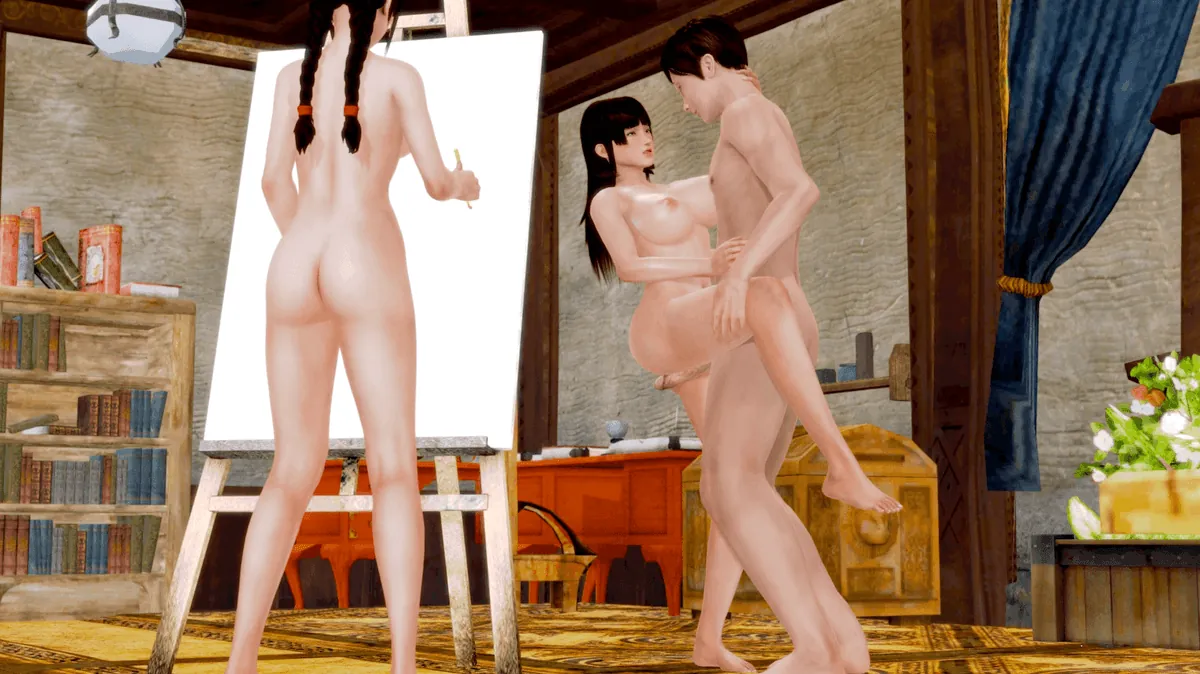
Let’s Play with Nanai represents a significant milestone in adult virtual reality gaming, introducing technology and gameplay mechanics that set it apart from conventional titles in the genre. Developed by VRJCC, this innovative game features a custom-built controller system based on a dutch wife, enabling players to experience dynamic position changes during gameplay without interruption. The game utilizes advanced motion capture technology and specialized VR cameras to create an immersive experience that goes beyond traditional adult gaming. Understanding what makes this title unique requires exploring its technical foundation, development journey, and the creative solutions VRJCC implemented to overcome early-stage challenges in VR adult game development.
The Innovation Behind Let’s Play with Nanai’s Unique Controller System
Imagine you’re back in 2015. The world is buzzing about a new frontier called virtual reality, but it’s all about your head. You strap on a device and look around a breathtaking landscape. But what about your hands? Your body? For most applications, it was an afterthought. For a certain genre of immersive experience, it was a deal-breaking problem. 😮
This was the exact challenge faced by the pioneers at VRJCC. They had a vision for an intimate, interactive VR experience, but the tools simply didn’t exist. There was no Oculus Touch to grab off the shelf, no Vive wands to program. The market for custom VR controller development was virtually nonexistent. They weren’t just building a game; they were inventing the physical language for a whole new kind of interaction from the ground up.
This chapter dives into the ingenious solution they engineered: the revolutionary VR adult game controller system at the heart of Let’s Play with Nanai. It’s a story of necessity birthing invention, of a simple friend’s suggestion turning into a game-changing feature that still sets the standard today. 🤯
Why VRJCC Created a Custom Dutch Wife Controller
Let’s rewind. The year is 2015. You want to create a truly immersive, physically interactive VR experience. What are your options? You could try to use a standard gamepad, but that instantly breaks immersion—fumbling with buttons and thumbsticks is the opposite of feeling present. Early VR motion controllers were either non-existent, prohibitively expensive, or completely unfamiliar to the average user. They were designed for waving a lightsaber or pointing a gun, not for the nuanced, intimate interactions our developers envisioned.
The team hit a creative wall. The initial prototypes were focused on tracking the player’s movements. Think cumbersome suits or complex sensor arrays. It was awkward, technically overwhelming, and frankly, missed the point of comfortable, accessible immersion. Then, during a brainstorming session, a friend offered a brilliantly simple piece of advice that would change everything:
“Instead of making the player move, why not make the dutch wife move? Let the player interact with an object that responds.”
It was a eureka moment. 💡 This shifted the entire design philosophy. The focus moved from tracking the complex, variable human body to creating a dedicated, intuitive interface—a physical proxy for the in-game character. Thus, the concept of the dutch wife VR controller technology was born.
This wasn’t just a new controller; it was a fundamental rethinking of the user’s role. The player isn’t performing; they are guiding, influencing, and interacting with a responsive partner. This approach solved multiple problems at once:
* Accessibility: No need for expensive full-body tracking suits.
* Comfort: Players could engage naturally from a seated or relaxed position.
* Immersion: Physical touch and movement were directly translated into the virtual space.
* Focus: It centered the gameplay on interaction with the character, Nanai, making her feel more real and responsive.
This pivot to a dedicated interface was the first masterstroke in VRJCC’s motion capture technology pipeline. It established the core truth that for deep immersion, you sometimes need to build the bridge between reality and the virtual world yourself.
How the Smartphone-Based Control System Works
So, VRJCC decided to build a custom physical interface—a “dutch wife” controller. But how do you make it smart? How do you translate a hug, a tilt, or a shift in position into the game without a jungle of wires and a fortune in specialized sensors?
The answer was already in everyone’s pocket. 📱
The team harnessed the power of the modern smartphone, turning it into the brain of the VR adult game controller system. By embedding a smartphone into the custom-built controller form, they unlocked a suite of sophisticated sensors that were already perfectly calibrated for motion tracking.
Here’s the technical magic in simple terms. Your phone has two key components that make this work:
1. The Gyroscope: This sensor measures orientation and rotational velocity. It knows if you’re tilting the controller forward, backward, or twisting it side-to-side.
2. The Accelerometer: This measures proper acceleration. It knows if you’re moving the controller up, down, left, right, or if it’s being shaken.
For smartphone gyro sensor VR gaming, these two work in tandem. The gyroscope provides precise rotational data (like the angle of the controller), while the accelerometer provides linear movement data (like pulling the controller closer). The phone’s processor fuses this data in real-time to create a highly accurate picture of the controller’s position and movement in 3D space.
A Practical Example: Let’s say you want to give Nanai a hug in the game. In reality, you squeeze the soft Let’s Play with Nanai controller and pull it gently toward your chest. The smartphone inside registers this complex motion: the accelerometer senses the inward pull, and the gyroscope registers the subtle rotation as it comes closer. This data packet is instantly sent via Wi-Fi to your PC running the game. Using VRJCC motion capture technology pipelines within the Unity game engine, that data is applied to Nanai’s 3D model. The result? She responds in real-time by leaning into you, her arms adjusting, creating a powerful sense of presence and response. It’s not just animation; it’s physics-based interaction.
This elegant solution meant the controller was:
* Wireless: No tripping over cables, maintaining full immersion.
* Powerful: Leveraging the substantial processing power of modern smartphones.
* Accessible: Most users already owned the core “tech” component.
* Precise: Offering a level of responsive interaction that felt natural and immediate.
It was a perfect marriage of innovative hardware design and clever software engineering, creating a custom VR controller development project that was both high-tech and deeply intuitive.
Real-Time Position Changes: A Game-Changing Feature
Here’s where the dutch wife VR controller technology evolved from being clever to being truly revolutionary. The team realized that a static interaction, no matter how immersive, could eventually feel limited. In nearly all other experiences of this type, if you wanted to change the intimate scenario or position, you had to stop the action. You’d need to open a menu, make a selection, and watch the scene reset or transition—a total immersion breaker. It was like having to rewind a movie and start a new scene every time you wanted a different angle. 🎬➡️⏸️
VRJCC asked a bold question: What if you could change everything, seamlessly, without ever leaving the experience?
This led to the pioneering innovation of real-time position change VR games. The physical controller became more than an interface for touch; it became a dial to dynamically reshape the entire virtual environment around you.
Here’s how it works: By using specific gestures and movements with the Let’s Play with Nanai controller—such as rotating it to certain angles or combining a tilt with a button press—you can intuitively signal a change. Want to switch from one intimate position to another? Simply perform the gesture. The game’s advanced systems, fed by the smartphone sensor data and processed through professional-grade Perception Neuron motion capture data integrated into Unity, orchestrate a seamless transition.
Nanai and the environment don’t blink out and restart. Instead, they animate fluidly from one state to the next. The camera perspective shifts smoothly, lighting adjusts, and Nanai’s motions blend naturally. The music and ambient sounds continue. You never hit pause on the mood or the immersion. It’s a continuous, player-directed experience.
The advantage this provides for gameplay continuity and user experience cannot be overstated. It transforms the experience from a series of watched scenes into a dynamic, interactive encounter. You are in the director’s chair, able to explore different interactions organically, driven by moment-to-moment feeling rather than a static menu selection.
To understand just how big a leap this was, let’s compare it to the traditional model:
| Feature | Traditional Adult VR Experiences (Pre-*Nanai*) | Let’s Play with Nanai |
|---|---|---|
| Position Changing | Requires pausing, menu navigation, and scene reset/load. | Real-time, seamless transitions initiated by controller gestures without breaking immersion. |
| Controller Type | Standard gamepad, keyboard, or generic VR motion controllers for menu navigation. | Dedicated custom “dutch wife” controller with embedded smartphone for direct physical interaction. |
| Gameplay Continuity | Interrupted, segmented experience. Flow is broken between scenes. | Uninterrupted, fluid, and player-driven narrative flow. The experience is a single, continuous session. |
This focus on real-time position change VR games solved a fundamental problem competitors hadn’t even fully acknowledged. It placed uninterrupted presence and user agency at the absolute core of the design. The Let’s Play with Nanai controller became the key to this living world, proving that true innovation in VR isn’t just about what you see, but how naturally and completely you can act within it.
This controller system is more than a peripheral; it’s the heart of the experience. It represents a milestone in custom VR controller development, born from a clear need and executed with breathtaking simplicity and ingenuity. It turned a technological constraint into a defining feature, setting a benchmark for physical interaction in immersive spaces. It reminds us that the most profound innovations often come from reimagining the bridge between our world and the digital ones we create.
Let’s Play with Nanai stands as a testament to innovative problem-solving in adult virtual reality gaming. By developing a custom controller system that leverages smartphone technology and motion capture, VRJCC addressed a critical gap in the market that traditional adult VR games had overlooked. The ability to change positions seamlessly during gameplay without interruption fundamentally transforms how players experience interactive adult content in virtual environments. The game’s technical foundation, built on Perception Neuron motion capture and the Unity engine, demonstrates the sophisticated engineering required to create truly immersive VR experiences. As the adult VR gaming industry continues to evolve, Let’s Play with Nanai’s approach to hardware integration and gameplay design serves as a blueprint for future developers seeking to push the boundaries of what’s possible in this emerging sector. The success of VRJCC’s vision shows that thoughtful innovation and user-centered design can create experiences that meaningfully differentiate a title in a competitive market.